Products
HKXR POWER

Overhead distribution • Rural electrification • Utility distribution • Distributed loads

Pole-Mounted Transformers

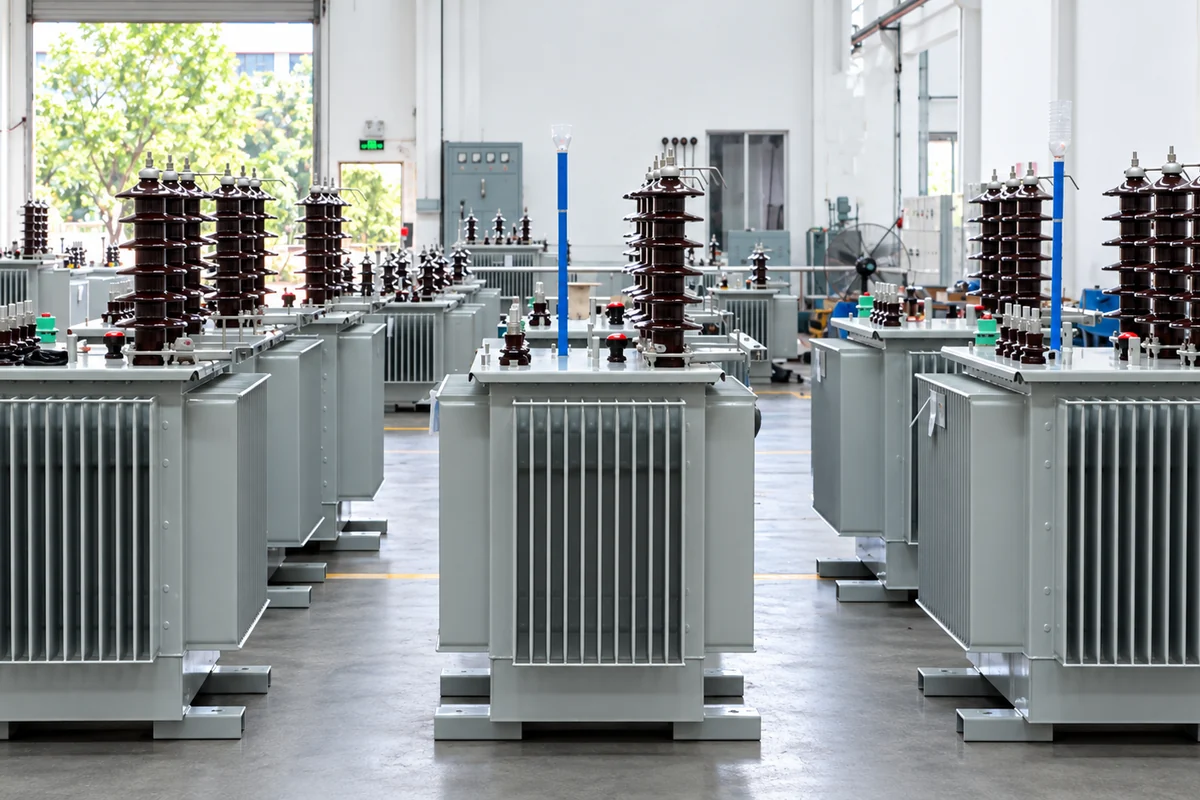
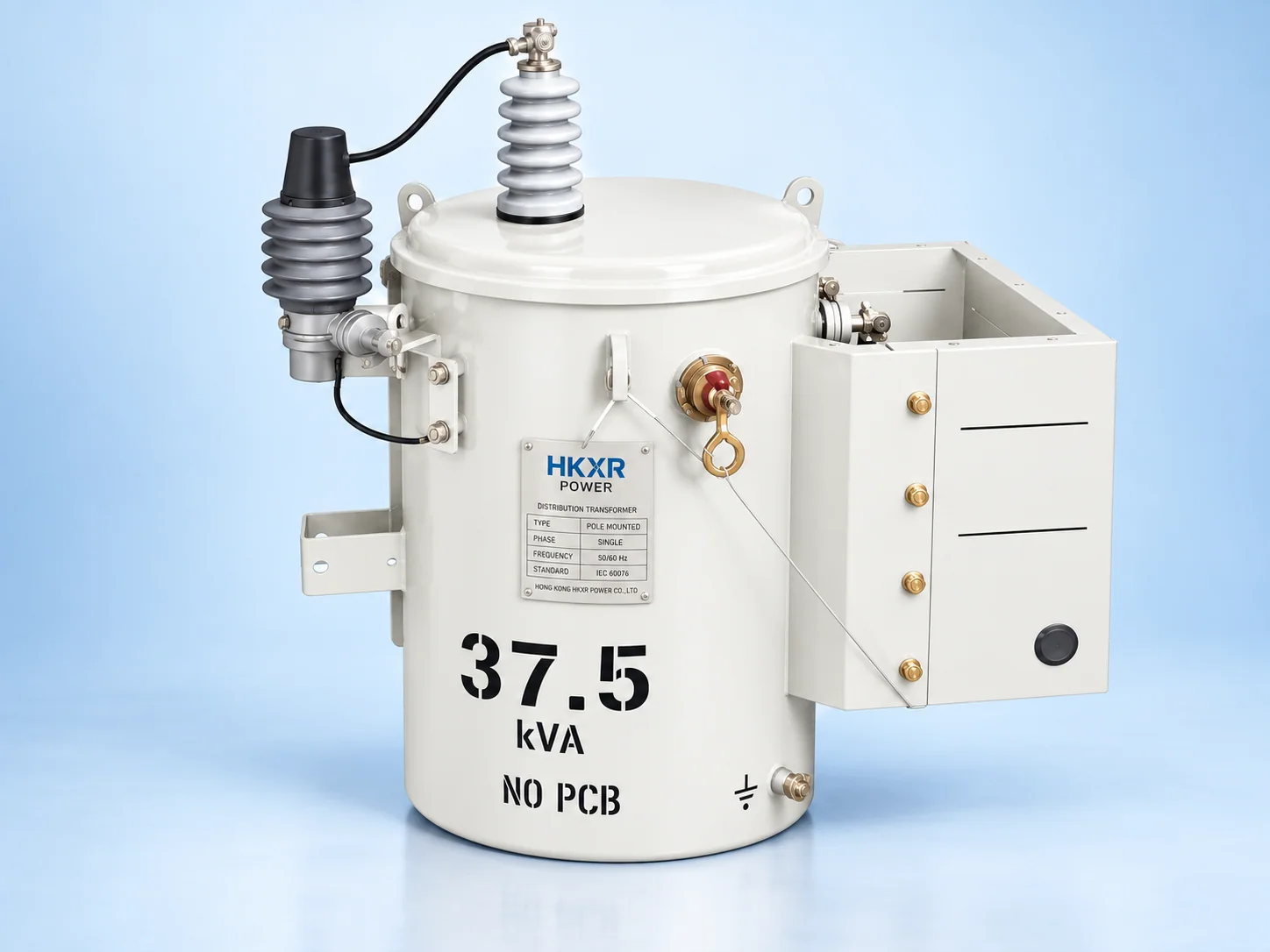
Pole-mounted distribution transformers for Philippine utility and rural electrification projects, with key 50, 75, 100 and 167 kVA configurations available for technical review.

Rated capacity3–333 kVA
Primary voltage13.2 / 13.8 / 34.5 kV
PhasesSingle-phase / three-phase
ApplicationsOverhead distribution / Rural electrification

Rated capacity: 3–333 kVA · Primary voltage: 13.2 / 13.8 / 34.5 kV · Secondary voltage: 230 V / 400/230 V / 460/265 V

Pole-Mounted Transformers

01 Technical data

Specifications for initial selection

Rated capacity: 3–333 kVA · Primary voltage: 13.2 / 13.8 / 34.5 kV · Secondary voltage: 230 V / 400/230 V / 460/265 V

Rated capacity
3 / 5 / 10 / 15 / 25 / 37.5 / 50 / 75 / 100 / 167 / 250 / 333 kVA
Primary voltage
13.2 / 13.8 / 34.5 kV
Secondary voltage
230 V / 400/230 V / 460/265 V
Phases
Single-phase / three-phase
Installation & mounting
Pole / platform mounting
Core & construction
Conventional / CSP
Tap range
±2 × 2.5%
Protection & accessories
Fuse / surge arrester / circuit breaker / CSP

02 Application engineering

Applications

Pole-mounted distribution transformers for overhead MV networks in the Philippines (13.2 / 13.8 / 34.5 kV), placing transformation close to dispersed loads in rural, peri-urban and utility feeder applications, as well as loads linked to renewable energy, remote-community supply and industrial parks.

01

Overhead MV distribution

Transformation on overhead medium-voltage feeders and branches (13.2 / 13.8 / 34.5 kV), installed on a pole or platform close to the load. Pole mounting removes the need for a substation building and suits the lines and clearances used by the network operator.

02

Remote and island supply

Remote communities, islands, mine camps and project sites fed from a limited MV line. Compact, light pole-mounted units simplify transport and installation in locations with restricted access and limited lifting equipment.

03

Small commercial and industrial loads

Workshops, small plants, telecom sites and roadside commercial supply connected to the overhead network. A pole-mounted unit provides a low-cost transformation point where a ground-level substation would be impractical or slow to permit.

Where to apply

  • Overhead distribution
  • Utility distribution feeders
  • Dispersed loads
  • Small commercial and industrial loads
  • Island and remote communities
  • Peri-urban networks

03 Define your configuration

Configure your transformer

Select the main project parameters.

Rated capacity

Primary voltage

Secondary voltage

Phases

Additional options

Tap range

Installation & mounting

Core & construction

Protection & accessories

04 Construction and options

Technical resources and options

Typical configuration

Outdoor oil-filled steel tank with natural cooling surfaces, lifting lugs and mounting brackets for pole or platform installation. Mounting arrangement: pole-hanger lugs for single-pole installation, or platform / two-pole structure for heavier units, dimensioned to the utility pole and clearance practice.

Available option

MV bushings and LV terminals: porcelain or polymer bushings with creepage distance and terminal type chosen for the network pollution level and connection practice, following PNS IEC 60076 / IEC 60076 and the NGCP / project technical specification.

Available option

Protection accessories: drop-out fuse cut-outs and surge arresters, and on some designs a built-in circuit breaker, coordinated with the feeder protection philosophy.

Available option

Conventional or completely self-protected (CSP) construction: CSP integrates primary fuse, arrester and breaker in the tank; availability depends on the design and utility practice.

Available option

Tap configuration: off-circuit tapping to compensate MV voltage variation along long feeders, with tap position selection and locking per specification.

Project engineering

Environmental engineering for high humidity, heat and salt-laden coastal air: coating, creepage distance and lightning-exposure assessment are confirmed at project level.

05 Applicable standards and requirements

Standards & engineering

Local market strongly uses ANSI/IEEE and NEMA
Local market strongly uses ANSI/IEEE and NEMA; First Philec pole DT brochure confirms this practice. Project/utility specification prevails.
NGCP / distribution utility requirements
Local market strongly uses ANSI/IEEE and NEMA; First Philec pole DT brochure confirms this practice. Project/utility specification prevails.
Primary voltage
13.2 / 13.8 / 34.5 kV
Secondary voltage
230 V / 400/230 V / 460/265 V
Request compliance and engineering documents

06 Manufacturing process

From production to testing

Production — Pole-Mounted Transformers
01Production
Assembly — Pole-Mounted Transformers
02Assembly
Testing — Pole-Mounted Transformers
03Testing

Downloads & support

Technical documents

HKXR POWER Technical Selection Guide

Guide for initial technical selection of distribution, power, dry-type, pole-mounted and pad-mounted transformers.

Unlock download

Complete your details to download the HKXR POWER Technical Selection Guide.

07 Decision support

Frequently asked questions

When should Pole-Mounted Transformers be selected instead of Pad-Mounted Transformers?

For Philippines, choose Pole-Mounted Transformers when the main duties are Overhead distribution and Utility distribution feeders; compare Pad-Mounted Transformers when Underground distribution and Renewable and private networks better match the site. Final selection depends on the installation environment, network topology, fire or oil-containment requirements, rating and project specification.

How should the main configuration options for Pole-Mounted Transformers be selected?

Key choices include mounting arrangement, fuse and surge protection and CSP configuration. Select them according to the load profile, connection arrangement, installation environment, protection philosophy and utility/EPC specification; items shown as options or project engineering are not automatic standard equipment.

What installation conditions should be confirmed for Pole-Mounted Transformers projects in Philippines?

Confirm ambient temperature, altitude, humidity, dust or corrosion exposure, indoor/outdoor location, ventilation, access and maintenance clearances. For applications such as Overhead distribution, Utility distribution feeders and Dispersed loads, cooling, enclosure or insulation and protection should be reviewed during engineering rather than assuming one environmental class for the whole country.

Which standards and utility/project requirements should be confirmed in Philippines?

Use Local market strongly uses ANSI/IEEE and NEMA as the starting technical reference. Requirements from NGCP / distribution utility requirements should also be confirmed. Final losses, temperature rise, impedance, taps, accessories, tests and documentation must be checked against the applicable project specification; this page does not imply automatic approval by any authority.

What tests, drawings and documents should be agreed before the purchase order?

Confirm the applicable routine tests, general arrangement drawings, electrical datasheet, accessory list and inspection/test documents before manufacturing. Type or special tests, witnessing and additional reports should be specified when the project requires them. For Pole-Mounted Transformers, also confirm site-specific environmental and installation engineering.

What information does HKXR need to prepare a technical quotation?

Provide at least Rated capacity, Primary voltage, Secondary voltage, Phases, the selected mounting arrangement / fuse and surge protection options, installation conditions and the applicable project or utility specification. If available, attach the SLD, datasheet or tender specification so the configuration can be reviewed before quotation.
Let’s discuss your project

Request a quote

Review your configuration and continue via WhatsApp.

Alternative contact

WhatsApp

Selected configuration

Select the main project parameters.

Edit configuration

Attach the technical data sheet, single-line diagram, photos or project documents. Send the file manually via WhatsApp.

Send by email

We use the details you submit to respond to this enquiry. Privacy.